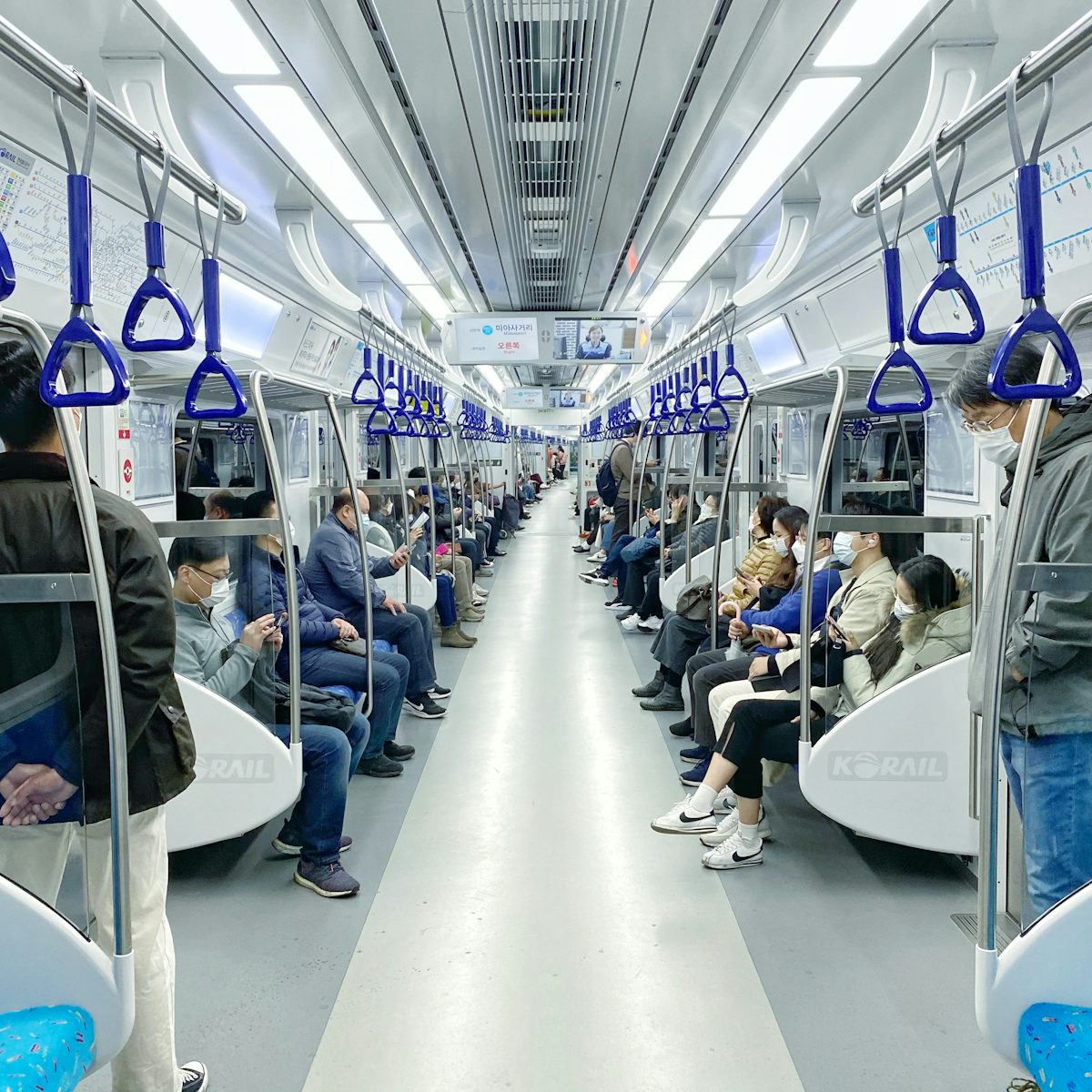
Seoul's subway and buses are fast, cheap and easy to use, but you cannot simply tap a foreign credit card at the gate. You need a transit card, and the three names you will hear most are T-money, the Climate Card and WOWPASS. All prices and rules below are as of 2026-11 and can change, so check the official pages before you buy.
How fares work
With a transit card, a basic Seoul subway ride costs 1,550 won and a city bus ride 1,500 won. Longer trips cost a little more by distance. Single-journey subway tickets cost 100 won more per ride, plus a 500 won deposit you get back, so they only make sense for one or two rides. A bus and subway transfer within 30 minutes of tapping off (one hour between 21:00 and 07:00) is billed as one journey, so tap your card when you get off the bus as well as when you get on.
T-money: the simple, nationwide option
T-money is the standard rechargeable transit card. You can buy one at convenience stores such as GS25, CU and 7-Eleven, and at station machines. Basic cards cost roughly 3,000 to 5,000 won, and special designs cost more. The card price is not a balance you can spend.
- Works on subways, buses and many taxis across the country, which makes it the best fit if you leave Seoul.
- Top up at station machines or convenience-store counters. Top-ups are generally cash only, so keep some won notes.
- Leftover balance can be refunded, minus a small fee.
Climate Card short-term pass: unlimited rides in Seoul
The Climate Card (기후동행카드) is Seoul city's unlimited-ride card, and visitors can use its short-term passes:
- 1 day: 5,000 won
- 2 days: 8,000 won
- 3 days: 10,000 won
- 5 days: 15,000 won
- 7 days: 20,000 won
- The physical card costs an extra 3,000 won
Rules worth knowing:
- Days are calendar days. The pass starts on the day you load it and runs from the first train to the last train of the final day, so a 1-day pass loaded in the evening is mostly wasted. You cannot load it in advance.
- It covers the subway within Seoul and Seoul city buses. Some sections outside Seoul are excluded, so check airport and day-trip routes separately.
- Short-term passes do not include the Ttareungi public bikes or the Hangang Bus river service.
- Register the physical card on the Tmoney Card & Pay website if you want to be able to get a refund.
Since March 17, 2026, Seoul says 440 new ticket machines at 273 stations on Lines 1 to 8 accept internationally issued credit and debit cards, as well as some mobile payment services, for buying and loading short-term Climate Card passes and single-journey tickets. An overseas card fee may apply. Convenience stores near stations also sell the card.
Is it worth it? At the base fare, a 1-day pass pays off at about four rides, while the 5-day and 7-day passes need about two rides a day. Add the 3,000 won card and you need roughly two more rides in total. If you ride only two or three times a day, plain T-money is often cheaper.
WOWPASS: transit plus a prepaid payment card
WOWPASS is a prepaid card for visitors that holds two separate balances: a payment balance you use in shops like a debit card, and a T-money balance for transit.
- Get it from WOWPASS machines at airports, stations, hotels and tourist areas, or reserve it in the app and pick it up on arrival.
- Load the payment balance with cash in many foreign currencies at the machines, or with an international card in the app.
- The T-money part is topped up separately, either with cash like a normal T-money card or by moving money from your WOWPASS balance in the app.
- As of 2026-11, the card fee is listed at about 5,000 to 6,000 won, and each cash withdrawal costs 1,000 won.
It suits travellers who want to change cash into won and pay with one card. If you only need transport, T-money is simpler.
Which one should you pick?
- Mostly in Seoul, with many rides a day: Climate Card short-term pass.
- Day trips to other cities, or only a few rides a day: T-money.
- One card for shopping and transit, loaded with foreign cash: WOWPASS.
- Travelling with others: at subway gates one card covers one person, so each traveller needs their own card.
Before you tap
- Taxis: most accept T-money and regular cards.
- Foreign contactless cards at the gate: not yet. Plans to let foreign cards tap in on Seoul buses from 2027 have been announced, but as of 2026-11 you still need a transit card.
- Keep a little cash for T-money top-ups, since many machines and stores accept only cash for this.
- Tap out when you leave the subway and when you get off the bus. Skipping it can cost you the transfer discount.
Pick the card that matches how you will move, load it on your first day, and Seoul's network becomes one of the easiest parts of the trip.
 Naver Map and KakaoMap in Korea: A Practical Guide for Visitors
 Waitlists and Reservations at Korea's Hot Places: CatchTable Global, Tabling and Door Tablets
 eSIM, SIM or Pocket Wi-Fi for Korea: How to Choose, and the ID Verification Catch
 Paying in Korea: Cards, Cash, Currency Exchange and Tax Refunds
 Hot Place Etiquette in Korea: Photos, Ordering Rules, No-Zones and Waiting
 Renting Hanbok Near Gyeongbokgung: Prices, Free Palace Entry and Photo Etiquette
 Incheon Airport to Seoul: AREX Express, All-Stop Train, Limousine Bus or Taxi
 Shopping at Olive Young in Korea: What Visitors Buy, Tax Refunds, Memberships and Sale Weeks
 K-Pop Spots in Seoul: Agency Buildings, Album Stores and How Music Show Audiences Work
 Rainy or Freezing Day in Seoul: Indoor Plans by Area
 Two Days in Seoul's Hot Places: A Neighbourhood-by-Neighbourhood Route by Subway