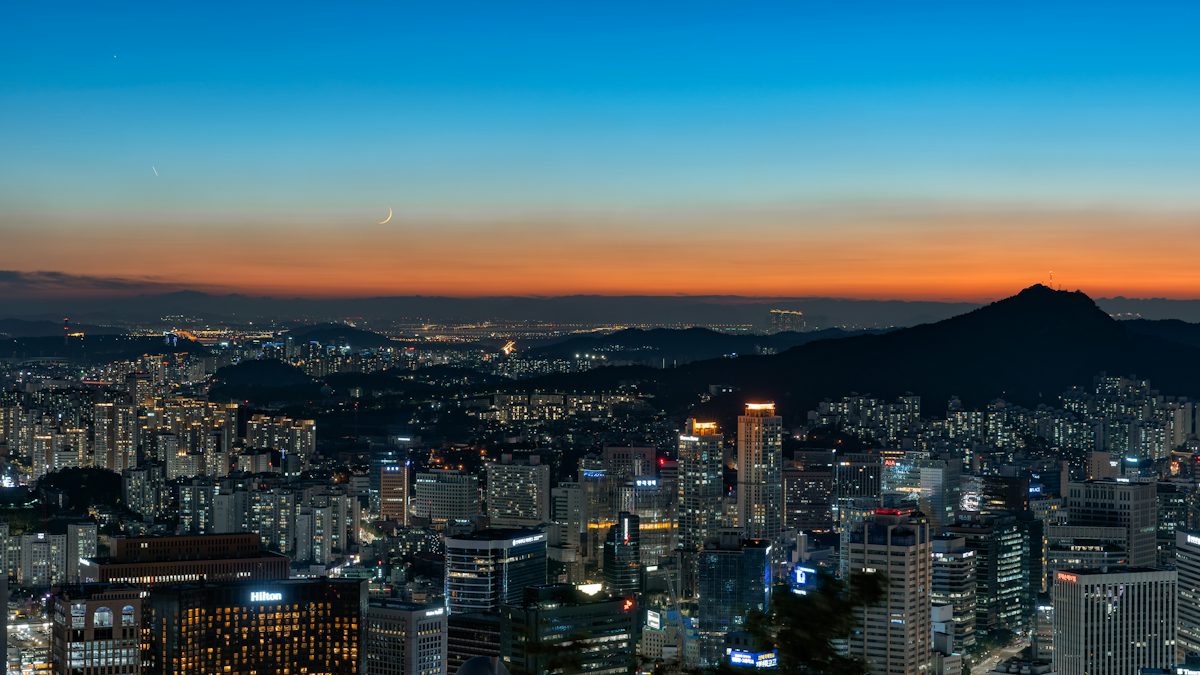
Two days is not much time in Seoul, but it is enough to see a palace, wander hanok lanes, eat at a market and spend a morning in Seongsu, the city's busiest cafe and pop-up district. The key is to group neighbourhoods so you ride the subway for minutes, not hours. This route assumes you start on a weekday morning, carry a transit card and use Naver Map for exits. Hours are as of 2026-11, so check closing days before you fix your dates.
Before you go
- Gyeongbokgung is closed on Tuesdays and Changdeokgung on Mondays, so avoid a Tuesday for Day 1.
- The busiest lanes of Bukchon Hanok Village are open to visitors only from 10:00 to 17:00.
- Many small cafes and pop-ups open late morning and change often, so check their Instagram the night before.
- A central hotel near Jongno, Euljiro or Myeongdong works for both days. If you fly out from Incheon, Hongdae is on the AREX airport line.
Day 1: Palace, hanok lanes and Euljiro nights
Morning: Gyeongbokgung
Start at Gyeongbokgung Station (Line 3) when the palace opens at 9:00. Enter through Gwanghwamun Gate and give yourself about two hours for the main halls and Gyeonghoeru Pavilion. From November to February last entry is 16:00, but mornings are calmer anyway. If you want to wear hanbok, rental shops surround the station; see our hanbok guide.
Late morning: Bukchon and Samcheong-dong
Walk east into Bukchon after 10:00, when visits are allowed. Keep your voice down, since people live in these houses. Then drift down to the galleries and cafes of Samcheong-dong.
Lunch and afternoon: Anguk and Ikseon-dong
Anguk Station (Line 3) sits in the middle of a dense cluster of bakeries, tea houses and design shops. One stop south, around Jongno 3-ga Station (Lines 1, 3 and 5), the narrow hanok alleys of Ikseon-dong are packed with cafes and small restaurants. Popular places run waitlists, so register early and explore while you wait. If you prefer more history, Changdeokgung is a short walk from Anguk.
Evening: Gwangjang Market and Euljiro
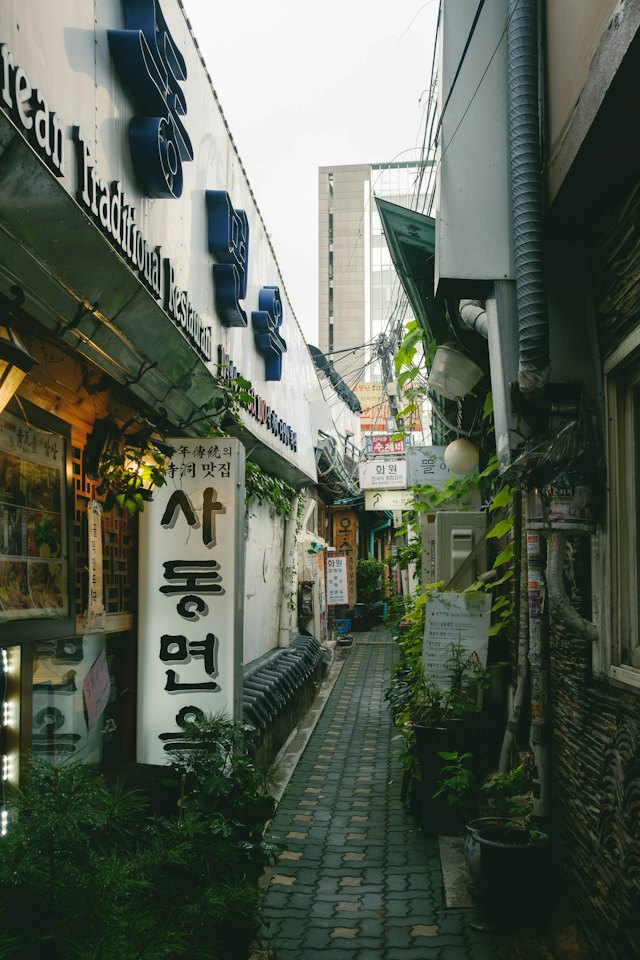
From Jongno 3-ga, take Line 1 one stop east to Jongno 5-ga for Gwangjang Market, where you can eat bindaetteok and other street food at the stalls. Then head to Euljiro 3-ga Station (Lines 2 and 3), where old print shops and machine workshops share alleys with small bars and restaurants on upper floors. Locals nickname the area Hipjiro. Signs are small and many places are up a flight of stairs, so follow the map closely.
Day 1 subway hops: Gyeongbokgung to Anguk, Anguk to Jongno 3-ga, and Jongno 3-ga to Euljiro 3-ga are each a single stop on Line 3.
Day 2: Seongsu, then Hannam or Hongdae
Morning: Seongsu
Take Line 2 to Seongsu Station, or the Suin-Bundang Line to Seoul Forest Station. Seongsu's old factories and warehouses now hold cafes, fashion flagships and a constantly changing line-up of pop-up stores. Weekday mornings are the calmest. Seoul Forest park sits at the western edge, and SM Entertainment's KWANGYA@SEOUL store is in the D Tower complex beside it. The multi-floor Olive Young N Seongsu beauty store is also in the area.
Afternoon option A: Hannam and Itaewon
From Seongsu, ride Line 2 to Sindang and change to Line 6 for Hangangjin or Itaewon. Hannam-dong's sloping streets have fashion and lifestyle stores, galleries and restaurants, and Leeum Museum of Art is nearby (closed Mondays). Itaewon has a wide range of international restaurants for dinner.
Afternoon option B: Hongdae and Yeonnam-dong
Stay on Line 2 all the way to Hongik University Station, roughly 30 to 40 minutes from Seongsu. Yeonnam-dong's cafes line the Gyeongui Line Forest Park, a long, narrow park near Exit 3. In the evening, Hongdae's streets fill with buskers, shops and bars. Hongik University Station is also an AREX stop, which is handy if you fly out the next morning.
If it rains
Swap the palace and Bukchon for the National Museum of Korea or COEX and the Starfield Library, and keep Seongsu and Hongdae, which have plenty of indoor stops. Our rainy-day guide has more ideas.
Tips to keep the pace
- Keep each day on one side of the city. Crossing back and forth is where time disappears.
- Waitlists are the biggest time sink at hot places. Register as soon as you arrive in an area, then explore nearby.
- Saturdays are the busiest at almost every stop on this route.
- Carry a power bank and a little cash for markets and transit top-ups.
- Leave your luggage at the hotel or in station lockers so you can walk freely.
This route covers the old city, the newest neighbourhoods and some of Seoul's best street food in two easy days, and still leaves room for detours.
 Naver Map and KakaoMap in Korea: A Practical Guide for Visitors
 Waitlists and Reservations at Korea's Hot Places: CatchTable Global, Tabling and Door Tablets
 Korea Transport Cards Explained: T-money, Climate Card and WOWPASS
 eSIM, SIM or Pocket Wi-Fi for Korea: How to Choose, and the ID Verification Catch
 Paying in Korea: Cards, Cash, Currency Exchange and Tax Refunds
 Hot Place Etiquette in Korea: Photos, Ordering Rules, No-Zones and Waiting
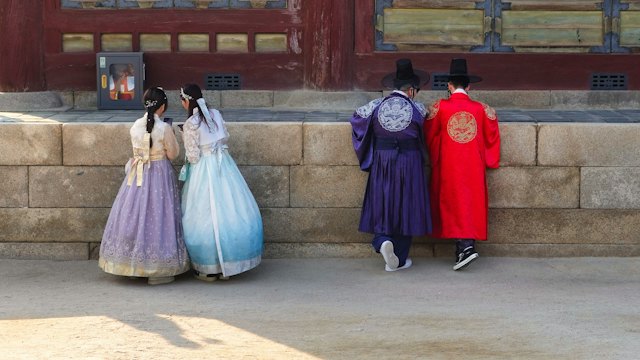 Renting Hanbok Near Gyeongbokgung: Prices, Free Palace Entry and Photo Etiquette
 Incheon Airport to Seoul: AREX Express, All-Stop Train, Limousine Bus or Taxi
 Shopping at Olive Young in Korea: What Visitors Buy, Tax Refunds, Memberships and Sale Weeks
 K-Pop Spots in Seoul: Agency Buildings, Album Stores and How Music Show Audiences Work
 Rainy or Freezing Day in Seoul: Indoor Plans by Area